Sensory and Regulation
What Is Co-Regulation and How Do I Actually Do It?
What Your Child Needs From You in Their Hardest Moments and How to Deliver It
Kimberley Clayton Blaine, MA, LMFT
Licensed Clinical Family Psychotherapist
Treatment for Neurodivergent Children and Families
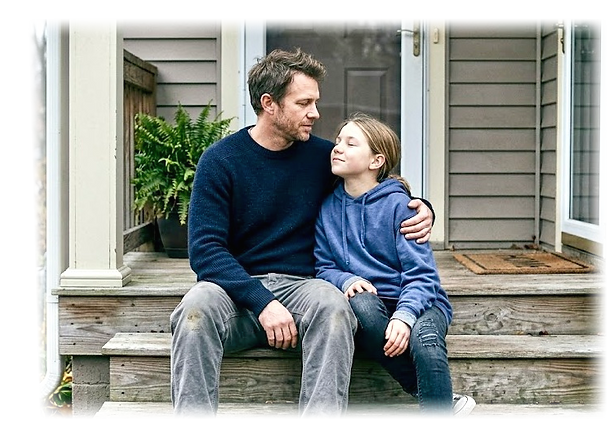
If you have ever been told to help your child calm down while you yourself were barely holding it together, you already understand the central challenge of co-regulation. Co-regulation is the process by which a calm, grounded adult nervous system helps bring a dysregulated child's nervous system back to baseline. It is not permissiveness, not a reward for bad behavior, and not the same as giving in. It is the neurological foundation that children must experience repeatedly from a trusted adult before they
can begin to build their own capacity for self-regulation. Your child is not choosing to fall apart. They are depending on you to help them find their way back, and understanding how to do that changes everything about how these moments unfold in your home.
If your child came to mind while reading that, you are in exactly the right place. Kimberley Clayton Blaine, MA, LMFT works with families like yours through teletherapy, parent coaching, and online courses. Her books on understanding emotionally complex children are available at TheMisunderstoodChild.com. When you are ready, begin support here.
› Co-regulation is not a parenting style. It is a neurological process.
When a regulated adult stays calm and present during a child's dysregulation, the child's nervous system literally takes cues from the adult's and begins to settle. This is not a metaphor. It is how the brain works, and it is why your state in those moments matters more than your words.
› Children cannot self-regulate before they have been co-regulated enough to internalize it.
Self-regulation is a skill that develops over years of repeated co-regulatory experiences with trusted adults. A child who has not yet built that internal capacity is not being defiant when they fall apart. They are showing you exactly where they still need support.
› A parent cannot co-regulate from a dysregulated state.
Two escalating nervous systems do not calm each other. They amplify each other. Before you can offer your child a regulated nervous system to borrow from, you have to find your own regulated state first. That is not a luxury. It is a prerequisite.
› Co-regulation looks different at different ages and for different children.
For a toddler it might be physical closeness and a slow, calm voice. For a school-age child it might be sitting nearby in silence. For a teenager it might be giving space while staying available. Knowing your child's specific nervous system tells you which version to offer..
› Co-regulation is a lifelong developmental practice, not a one-time fix.
Every time you read your child's state, regulate your own response, and offer them a steady presence, you are building their capacity to eventually do it for themselves. That process does not happen overnight, and it requires you to keep showing up even when it is hard.
A DEEPER LOOK FROM A SPECIALIST
Kimberley Clayton Blaine, MA, LMFT · Licensed Clinical Family Psychotherapist · Laguna Niguel, California
You Are Already Teaching Them, Whether You Know It or Not
Parents are their children's first and most powerful role models. Every nuance you carry into a moment of crisis, your tone, your body language, your energy level, is teaching your child something about how to handle emotional upheaval. Co-regulation is not permissiveness and it is not giving in. It is one of the most cognitively demanding things a parent can do. It requires you to remain conscious and intentional at the exact moment your child is yelling, flopping on the floor, or coming completely apart. When two nervous systems are both running at high energy, they escalate each other. That is not a parenting failure. That is biology. Co-regulation is the deliberate choice to be the one who comes down first, so your child has something steady to borrow from.
What Gets in the Way
The biggest barrier I see in my practice is old messaging. Parents often carry the belief that when I was young I was never allowed to behave this way, so why should my child be any different. That belief makes co-regulation feel like surrender. But the goal is not to allow the behavior. The goal is to help the nervous system return to a place where the child can actually receive guidance, correction, and connection. The other barrier is pace. Parents rarely stop long enough to see the world through their child's eyes. When you build even a small amount of empathy into that pause, it creates a buffer between your own big feelings and your child's big behavior. It is also worth remembering that you have decades of life experience that your child simply does not have yet. These are small humans who are completely dependent on the trusted adults around them to help them find their way back to the frontal lobe, which is where calm lives, and where better decisions get made.
What Co-Regulation Actually Looks Like
Knowing your child is where co-regulation begins. When you truly know your child, you know when to step in and when to step back. You know when silence is more powerful than words. You know when open arms will help and when they will feel like pressure. You learn to recognize the ticking time bombs before you step on them, and that knowledge becomes your prevention strategy. Co-regulation is not something you do once and master. It is a lifelong developmental practice that requires you to read your child and read your own reaction to them in real time, every time. Children depend on trusted adults to help them feel safe, and that safety always begins here. When a parent learns to regulate first, the child learns that big feelings are survivable. That is the foundation everything else is built on.
Why Preventing Extended Dysregulation Is So Critical
Here is something every parent needs to understand, and it changes how urgently co-regulation matters. When a child enters an extended dysregulated state, it can take hours for their nervous system to fully recalibrate. Even when the child looks calm on the outside, their internal system is still working to recover. No parent, and no human being of any age, would choose to stay in that state. Even adults who experience significant emotional dysregulation know how physically and mentally exhausting the recovery process is. For a child whose regulatory system is still developing, that recovery takes even longer and costs even more. This is precisely why prevention matters as much as response. Co-regulation is not just something we offer during a crisis. It is what we offer consistently, before and during and after, so that the nervous system never has to travel so far from baseline that the return trip takes the rest of the day. Every moment of early, attuned co-regulation shortens the duration of dysregulation and protects the child's system from the cumulative cost of repeated extended episodes.
Is co-regulation just letting my child get away with bad behavior?
Co-regulation is not about the behavior. It is about the nervous system state the behavior is coming from. A child who is dysregulated does not have access to the part of their brain that can receive correction, process a consequence, or make a better choice. Co-regulation brings them back to a regulated state so that the teaching, the conversation, and the connection can actually land. Addressing behavior during a meltdown is like trying to have a serious conversation with someone who is drowning.
Regulation comes first, and everything else becomes possible after.
How do I stay calm when my child is completely out of control?
This is the hardest part of co-regulation and the most important. Your nervous system has to come first, not because your feelings matter more, but because you cannot offer your child something you do not have. That might mean taking three slow breaths before you respond, lowering your own voice deliberately, or grounding yourself physically before you enter the room. It also helps to remind yourself in those moments that your child is not giving you a hard time. They are having a hard time, and they need you to be the one who is not.
What does co-regulation actually look like? What do I do or say?
It depends on your child and the moment. For some children, co-regulation looks like sitting nearby without speaking, offering a calm physical presence without adding any demand. For others it is a slow, low voice saying something simple like I am right here, you are safe, we can figure this out together. For others it is a hand on the back or an open invitation for a hug without requiring it. The common thread is that you are not trying to fix the feeling or stop the behavior in that moment. You are staying regulated yourself and making your regulated state available to your child's nervous system until theirs can find its way back.
At what age should my child be able to regulate on their own?
Self-regulation develops gradually across childhood and adolescence, and for neurodiverse children the timeline is often longer than it is for neurotypical peers. Most children do not have reliable self- regulation capacity until their mid-to-late teens, and even then they will need co-regulatory support during especially difficult moments. The goal of all the co-regulation you offer now is to build that internal capacity over time, not to produce a child who never needs support. Every time you help your child return to calm, you are depositing something into their long-term regulatory development that they will eventually be able to access on their own.
.png)
Kimberley Clayton Blaine, MA, LMFT
Licensed Clinical Family Psychotherapist · Founder, The Misunderstood Child
is a licensed clinical family therapist, nationally recognized
neurodivergent child specialist, and the founder of The Misunderstood Child. Known nationally for over a decade as The Go-To Mom™, Kimberley has been a pioneering voice in family mental health, parenting education, and child development since 1998. A Jossey-Bass published author, UCLA instructor, and contributor to the Wall Street Journal and USA Today, she now dedicates her practice to whole-family care for families raising emotionally complex and neurodivergent children. Her teletherapy, coaching, classes, and books are available at TheMisunderstoodChild.com.
Contact:
ClaytonBlaine@gmail.com or 626-314-6518
This email is not HIPAA Compliant.
For confidentiality, call the number listed.
Offices Locations:
Ladera Ranch, Laguna Niguel and Westlake Village